This area of the country has a saying.
"If you don't like the weather wait 3 minutes."
and it does change that often. It's kind of like Rochester only worse. They also get about
200 days of rain. You never went anywhere without your raincoat. If it was beautiful when you
left it would probably be raining by the time you got back. The land is very lush and covered
by these yellow flowers. We were told this was Scottish Grouse, brought by the original
settlers to use as a green fence. It took over and now its considered a weed here.
This area of Chile was settled by German immigrants in the 1800's. These were mostly second sons or others who couldn't expect to inherit land. There is a very strong German influence to this entire area. The houses are very German styled, many people still speak the language, and some of the food is still very German.
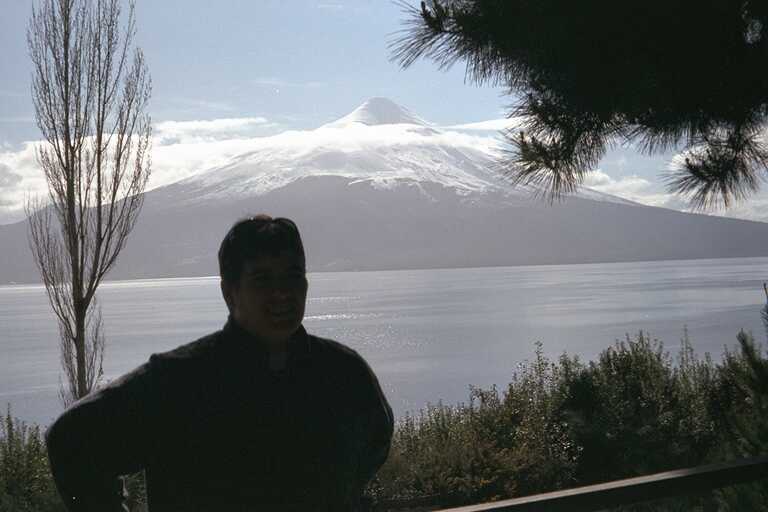
The hotel we were staying at, Hotel Westfalia, was right on a lake across from a volcano, Osorno. My father's goal during our week there was to get a picture of the entire volcano without clouds getting in the way. It didn't happen.
This was the first attempt to get a picture of Osorno. This was actually taken while we were on our way to climb it.
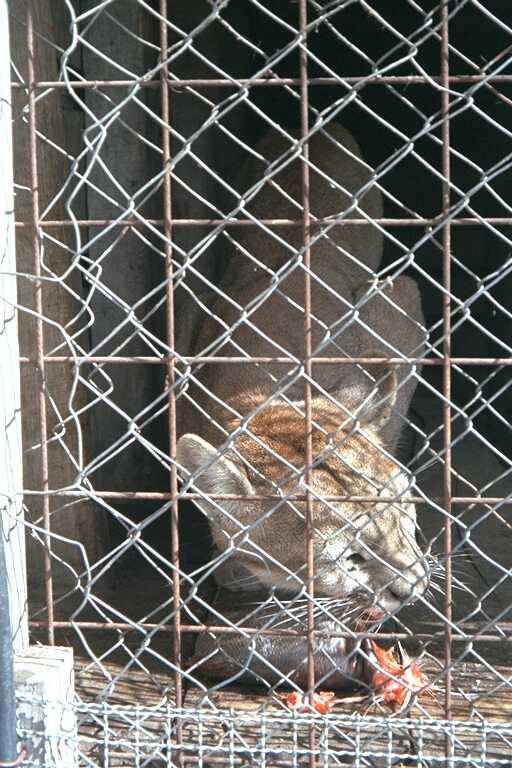
We signed up with a tour company. There really wasn't any way to reach most of these places on your own. Ingrid, our guide for this and the next day was pretty cool. She was actually from Germany. She came to Chile on a trip, married a Chilean and never left. She knew just about everything. On our way out to Osorno she stopped us at a farm that had a Puma in a cage. We got there at lunch.
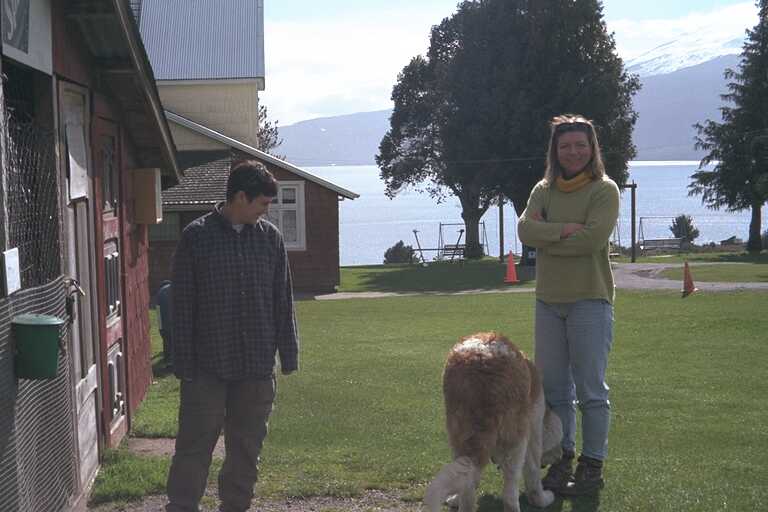
That's Ingrid on the right, being nibbled on by a St. Bernard puppy. And people complain Cosmo is big! This puppy had a thing for clothes. He nibbled on her shoes, my shirt anything he could reach, and as a St. Bernard that was a lot!
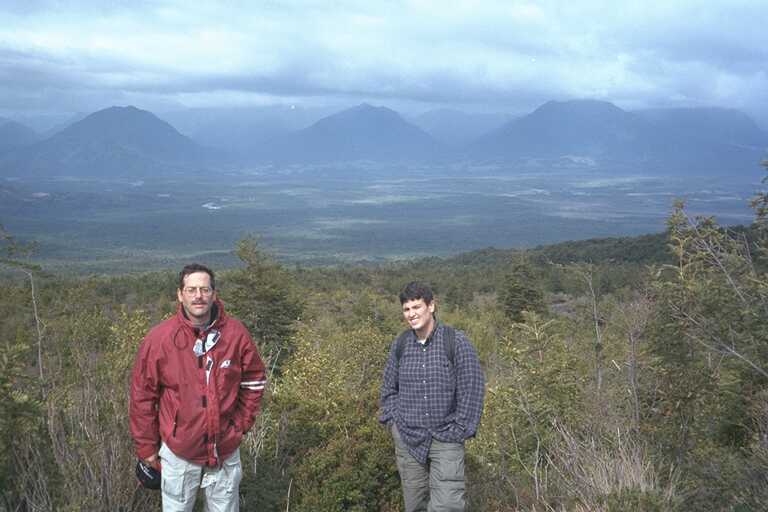
This is from part way up Osorno. Those are three extinct volcanos in the back. This was still low enough down that there was no snow yet. That will change. We couldn't drive up the volcano because the road wasn't good enough, but as we were hiking a red pickup drove past us. Ingrid turns to us and asks if we wanted to hitch the rest of the way. We said sure and next thing you know we're sitting in a pickup bed driving up the volcano with a man and his wife and two year old son. Its a good thing they had us too. They would never have made it up without us standing on the wheels.
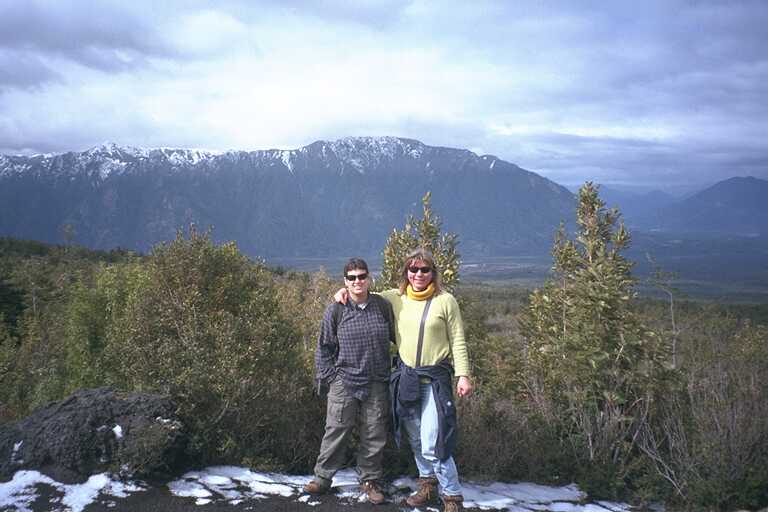
Ingrid and me a little higher up the volcano. Notice the beginnings of snow.
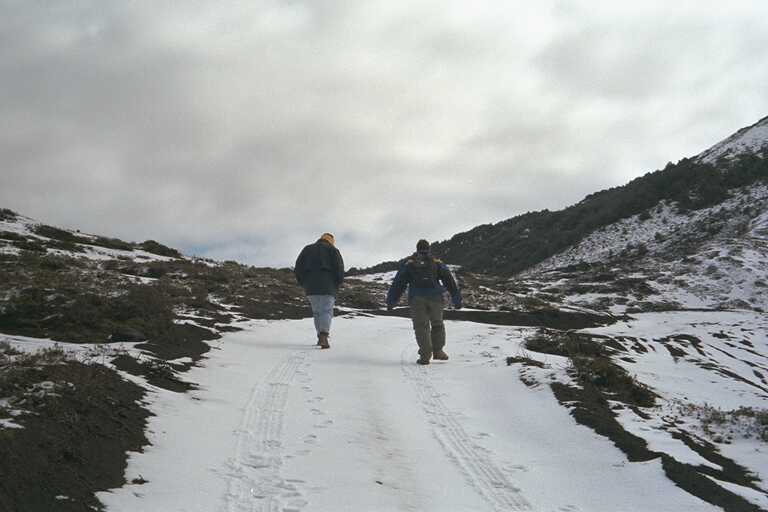
Even with us standing on the wheels we couldn't go all the way. We hiked the last bit and let me tell you it was starting to get pretty cold.
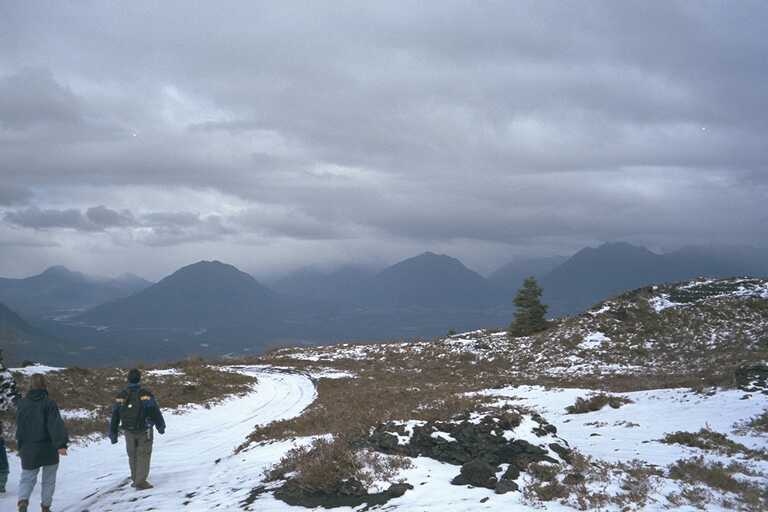
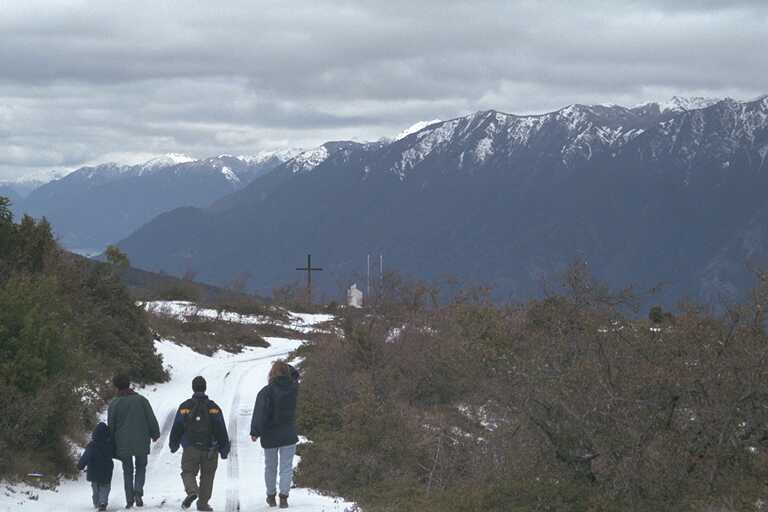
Everywhere you go in Chile you come across a shrine. Even at the top of a volcano. I forget why this one was there.
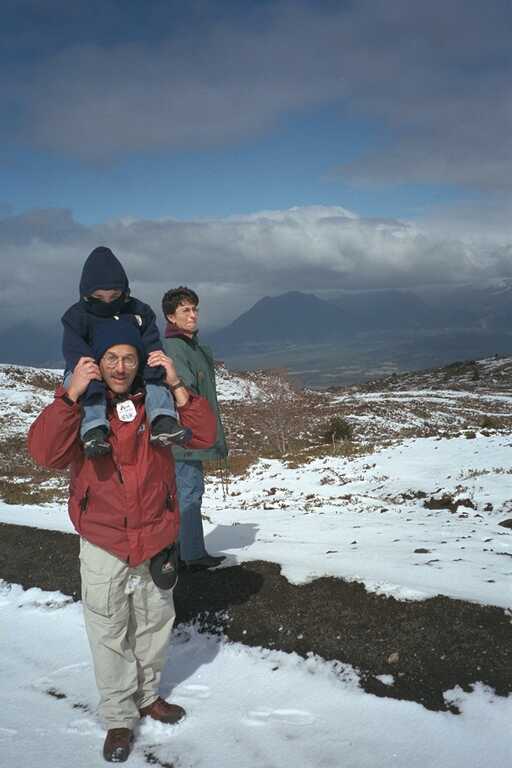
This was all we ever saw of the kid. Two eyes peeking out from between a hood and a scarf. He wasn't particularly fond of the cold. I'm not sure how he ended up on my father's shoulders.
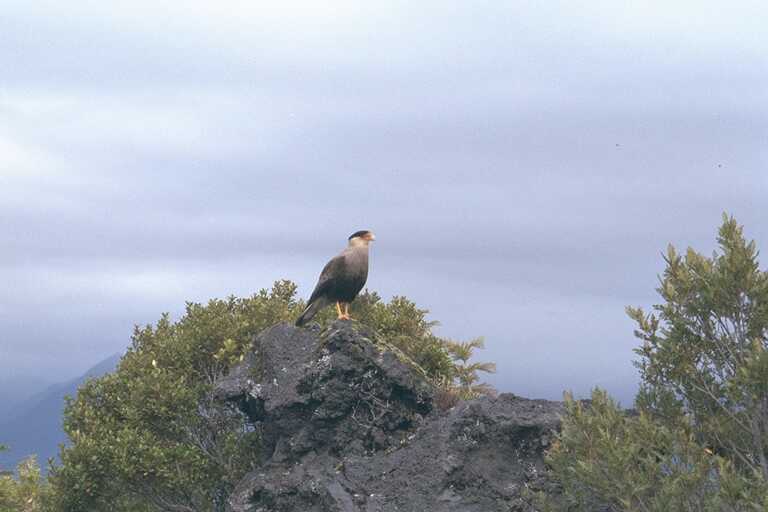
I forget what this bird was called. It was written in the little yellow dictionary my father carried around with him everywhere he went. The dictionary that is probably still on a bus somewhere in San Pedro de Atacama (the other extreme of the country)
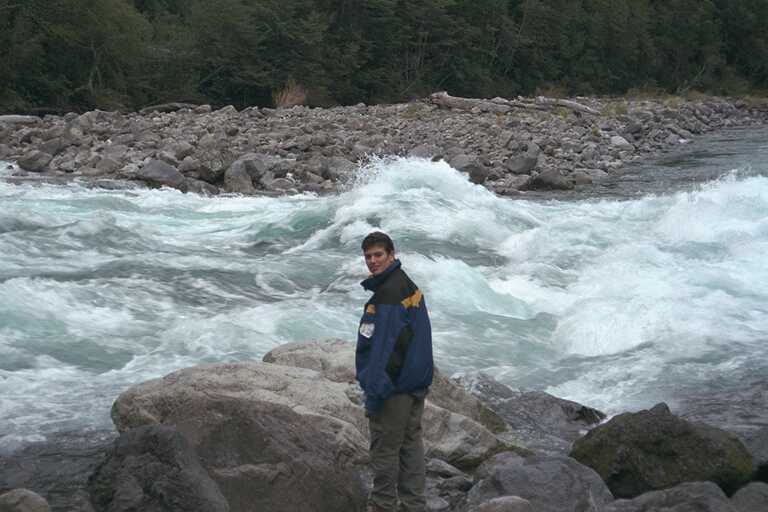
I forget what this river was called. It was a national park of some kind. The waterfall wasn't that impressive, about the size of Great Falls on the Patomac. What was impressive was the water. It was mostly glacial runoff and this very clear aqua color. The picture doesn't quite capture it, but you can almost see it.
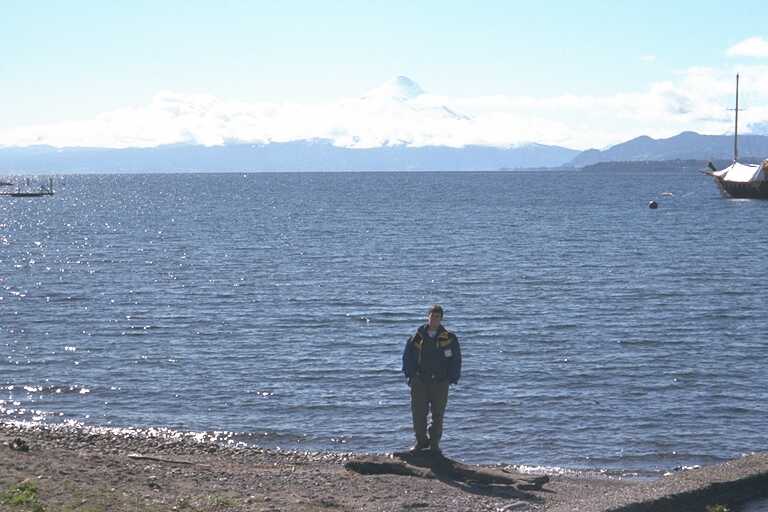
Yet another attempt to get a picture of the volcano. Some people don't know when to admit defeat.
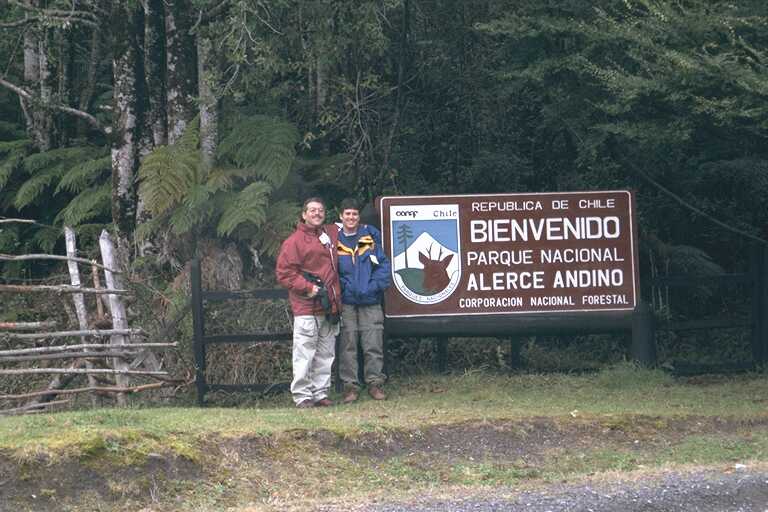
Parque Nacional Alerce Andino is one of the two national parks in the area. National parks in Chile are different than they are in the states. There are no campgrounds or ranger stations. There are no paved roads with signs telling you what every plant is. And as for tourists, well there was us.
National Parks in Chile are big expanses of forest with (in this case) two trails and an unpaved road. So imagine if you will, Yellowstone with no campers, no rangers and NO PEOPLE!!!
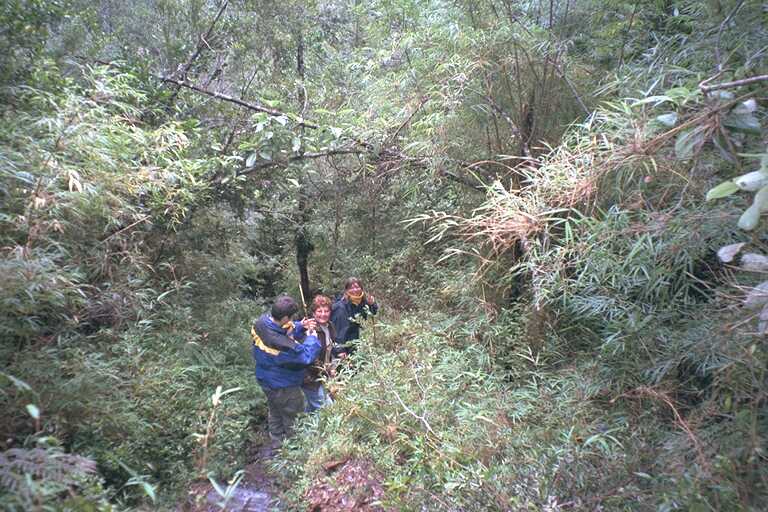
We shared Ingrid today with a couple from France, Pierre and Susie. Alerce Andino (named for the Alerce trees I'll point out later) is a rainforest. Now I know anyone reading this is picturing the Amazon and sweating people in shorts, but that's a Tropical Rain Forest. This wasn't. In fact while we were there it might have better been called a Snow Forest.
Notice the stick in my hand. Every step taken on the trail had to be checked with the stick first. The mud didn't quite freeze, but it definately appeared more solid than it was. If you didn't check a spot with a stick you might find your foot going down a foot or two into very cold very wet MUD. If you look you'll see the muddy streak on my rear where I slipped on some of that same mud.
The vegetation in the forest was so thick that it was impossible to walk off the trail, and if somehow you managed you would lose it within 5 feet. Growing up around the tamer forests of the midatlantic, where trail blazing means just walking out into the leaves and risking poison ivy, this was somewhat of a shock. I'm used to trails being something there to make life a little easier, not as a necessity for motion. The term A wall of vegetation came from places like this.
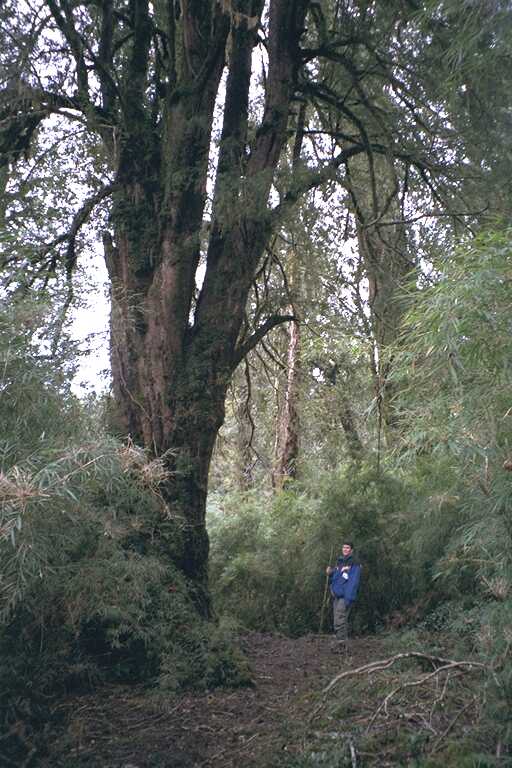
This is me next to a small Alerce tree. These trees grow to be 4 meters in diameter and 3000 years old. The bark of the trees are covered by parasitic vines that grow up to a foot thick on the trees. We followed this trail for about 45 minutes to get to this tree.To get to the big Alerce trees you need to follow this trail for another 4 hours or so. Its recommended as an overnight trip. Ingrid described it as breathtaking to be surrounded by these huge trees. I believe her.
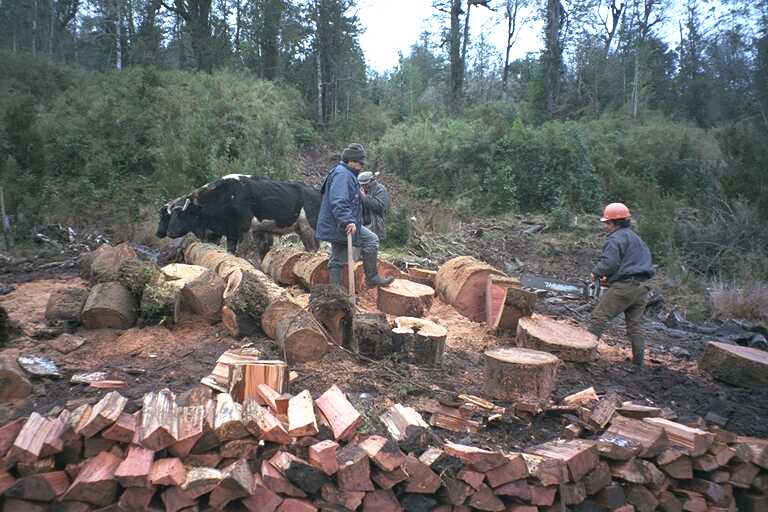
When my parents went to the Red Wood Forest back when I was a baby my father brought home a piece of wood that he made into a clock that hangs in our living room. Driving out of the forest we passed some farmers cutting fire wood. My father makes them stop the van and ask the farmers if they would give him a piece of the wood. He couldn't find one the right dimension for what he wanted so they cut him one right there. We had to carry this piece of wood with us for the rest of the trip, and somehow I was the one who ended up smuggling it back into the states. He says he's going to make a clock out of it in the shape of South America. After all that he'd better.
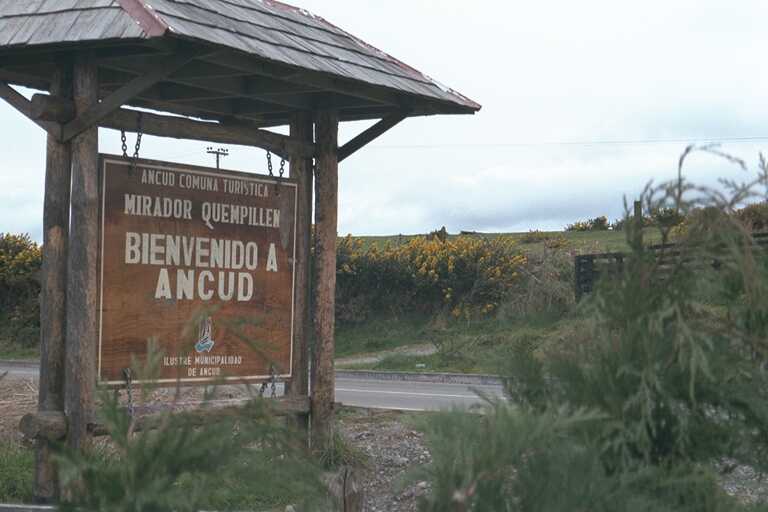
Of the coast of Puerto Montte is a large Island called Chiloe. After being settled by the spanish Chiloe spent over one hundred years isolated from the mainland and developed a very unique culture. Chiloe is famous for two things, its superstitions and its churches.
For a population of approximately 160 thousand there are over 160 churches, each one built in a different style. The churches form a network across the island, from the tower of any one, you can see the tower of the next.
Chiloe is an island of fisherman. Many of the houses are built on stilts over the water, and even in early spring there were the boats of the shellfish divers anchored in the harbor. The superstitions reflect that.
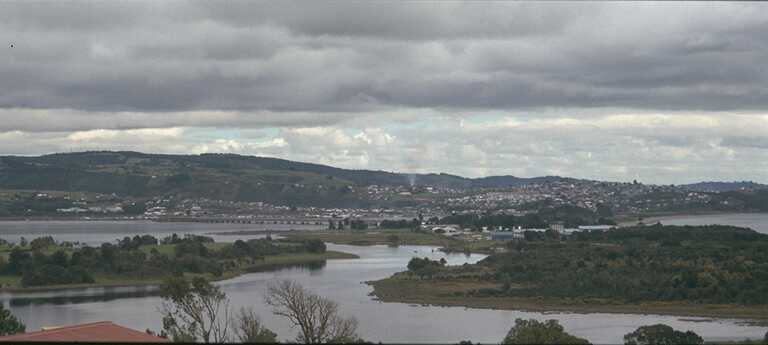
Looking out over Ancud, one of the cities of Chiloe.

All over Chiloe we saw amazing wood carvings. This one depicts life on the island. It was about 4 feet long and shows everything from the famers to the fishermen to the famous stilt houses. Unfortunately it doesn't show up real well here.
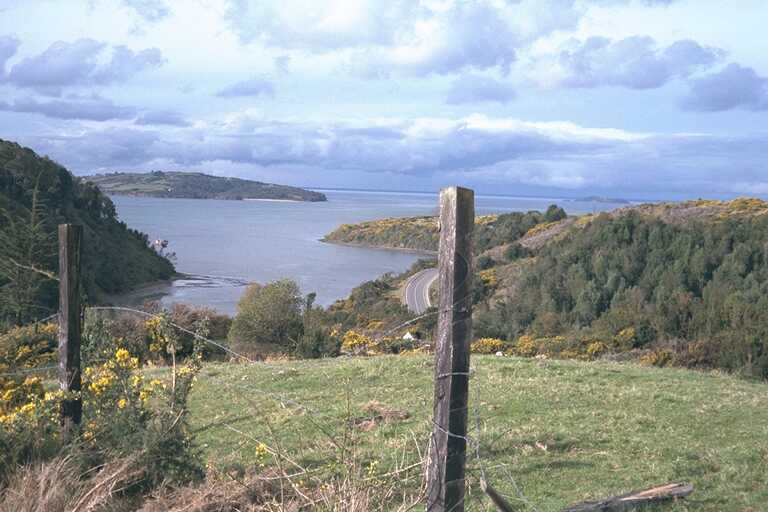
Chiloe is an island of rolling hills covered with flowers (that same Scottish Grouse). Its landscape has been compared to parts of Spain, perhaps why its settlers felt so much at home. Everywhere were sheep with their lambs, cows and boats. It was definately a very pretty place.
Back to Chile Trip